Showing posts with label non-fiction. Show all posts

Sunday, 13 January 2013

Castle Park Stories


The streets of Lancaster are full of stories. From the first Roman settlement, the founding of the castle in the eleventh century, the city's brief boom as a trading port to the vibrant community today, if walls could speak they'd have so much to tell.

Castle Park, the small area surrounding the castle and Priory, is one of my favourite parts of town. With its steep cobbled streets, fine houses and a quayside lined with converted warehouses, all in the shadow of the castle itself, it doesn't take a giant leap to imagine the folk living there two hundred or even five hundred years ago. So when Litfest put out a call for local residents interested in history, photography or writing to participate in a lottery funded writing project, I didn't take much persuading.

You can find out more about the project here, but essentially we have six weeks to put together an exhibition about the area.

There's so much scope in such a small area that it's hard to know where to start. Around fifty people want to be involved with interests as diverse as slavery, the Quakers, maritime and family history. Already we've heard some marvellous stories such as the banter between the prisoners held in the castle and the factory girls passing by. So the story goes, the young women would take great delight in giving the male prisoners a glimpse of the delights they were missing. Brazen hussies! We heard too of the grammar school boys who were allowed to go on the roof of the church before prayers to get a better view of the castle hangings. Let that be a lesson to you all boys!

I have my first Open University tutor to thank for the particular piece of history I'm hoping to explore. She's an expert in Lancaster's connections with the slave trade, back in Georgian times when Lancaster was one of England's major ports. She took us on a walking tour of the city and in passing pointed out a rather fine house just next to the castle. Built in 1720, it was once home to a successful merchant involved in the slave trade. He had a black female servant, brought to England from the West Indies. I've always wondered how this woman came to be in Lancaster and how it must have felt to live under grey Lancashire skies so far from home.

I've only just started my research, but already I've uncovered the most macabre tale. Truly, truth is stranger than fiction.

I wonder what other stories this fine house has to tell?


20 Castle Park, Lancaster

Tuesday, 1 January 2013

Intimidating books

My plans to start the new year with a flurry of exercise and administrative efficiency have been hampered somewhat by a stinking cold. I thought I'd done well to avoid it as my family fell one by one but, just as I was congratulating myself on my immunity, I too have succumbed.

But it could be worse. I have a huge stock of reading material to keep me occupied. You might remember that I was hankering after a fine cloth bound edition of Les Miserables. Well, I was not disappointed on that or many other counts. My intention was to read it before watching the film that is to released mid January. Now I have the book in my hands I realise the flaw in my thinking. With 1232 pages of tiny print it is, quite frankly, massive.

Now I'm not easily intimidated by a book, but weighty tomes like this do fill me with a certain sense of dread. Yet with the inclement weather and another week off work, I have girded my loins and taken the plunge. And what a treat it is too! Clearly my year of studying the nineteenth century novel has paid dividends. What does it matter that it has taken the first seventy pages to establish that the Bishop of Digne is both generous and open minded? And then, just when I thought we had an inciting incident in the arrival of the ex-convict Jean Valjean, we have another diversion into his backstory and the injustices of French society. Perhaps it's just the luxury of sustained spells of reading, but I am really having a ball.

It might even be the time to tackle my other bête noire - Mary Warnock's Existentialism. I find this combination of big ideas and academic writing quite intimidating. My husband's gift of 'The Existentialist's Guide to Death, the Universe and Nothingness' might be more accessible. Certainly it started well over a hot chocolate in Caffe Nero, but then I started scratching my head over the distinction between 'being-for-itself' and 'being-of-itself'. Perhaps that's one to pursue another day.

Sunday, 30 December 2012

Best of 2012

It's been a good year for reading and the first one where I've kept a record of all my books.

2012 saw the completion of my English Lit degree. It was the year I learnt to love Middlemarch and think that anything less than 600 pages constituted a short book. I began my A Level studies with Heart of Darkness more than twenty years ago and finished my degree with the same, perhaps a little wiser but certainly better read.

This year I also signed up for the Classics Challenge, selecting fifty classic books to read over the next three years. My favourite so far has been Graham Greene's Brighton Rock, partly for its pace but mainly for its characterisation of Pinkie, the teenage gang leader. Villains are so much more interesting than the good guys, don't you think?

I have fellow book bloggers to thank for my next two choices. Firstly there's the discovery of Elizabeth Taylor, in particular Mrs Palfrey at the Claremont, which impressed me with its sensitive portrayal of old age, both sad and humorous. Taylor is, I think, a fabulous example of a writer who shows rather than tells and I very much admire her understated style. Secondly, I learnt that I can enjoy nature writing, at least in the company of Robert Macfarlane and his book The Wild Places. I'll certainly be dusting off my walking boots but, lacking his astonishing hardiness, I will be waiting for better weather.

A Dickens Day at Lancaster Library persuaded me to try Tomalin's biography of Dickens. I have it on audiobook and I dip into it every time I want to be inspired by his remarkable energy.

Contemporary fiction hasn't had much of a look-in this year, but I must mention The Snow Child by Eowyn Ivey. It's a moving and magical tale of an elderly childless couple build a snow child that comes to life. It would make a very good read for the chilly winter months.

So that was 2012. With a shelf-load of new books and the perfect reading room, there's a lot to look forward to in 2013.

Here's wishing you and yours all the very best for the year ahead.

Friday, 21 December 2012

The Wild Places - Robert Macfarlane

'I could not now say when I first grew to love the wild, only that I did, and that a need for it will always remain strong in me. As a child, whenever I read the word, it conjured images of wide spaces, remote and figureless. Isolated islands off Atlantic coasts. Unbounded forests and blue snow-light falling on to drifts marked with the paw-prints of wolves. Frost-shattered summits and corries holding lochs of great depth. And this was the vision of a wild place that had stayed with me: somewhere boreal, wintry, vast, isolated, elemental demanding of the traveller in its asperities. To reach a wild place was, for me, to step outside human history.'

The Wild PlacesIn The Wild Places Macfarlane takes the reader on a series of journeys into some of the most remote parts of Britain and Ireland. Beginning his journey on the Llyn peninsula in Wales, he travels the length and breadth of the British Isles, from Rannoch Moor in the Highlands of Scotland to the Essex mudflats, from Croagh Patrick in Ireland to the hills and valleys of Cumbria. Each chapter is devoted to a different setting - island, valley, summit, forest, salt marsh to name but a few.

This book is a celebration of the wild, the elements and the natural world. Sleeping out in remote places and inhospitable weathers, Macfarlane experiences moments of joy but also of fear.  This book is a natural history lesson, but with literature, art and geology thrown in. The author pays tribute to those who've made a lifetime's work of studying hares, peregrine falcons, the formation of sand dunes or the movement of waves. He tells the history of the people too, from the Highland Clearances to the Irish Potato Famine. His writing is wonderfully descriptive, almost poetic, with both the eye to see and appreciate the wild places and the skill to bring them to life on the page, as here on the banks of Loch Coruisk:
'Along the north shore, we traversed acres of soaked marsh, pocked with deep sink-holes. The steep ground to our left was a mosaic of brown rock, grouted with grass and streaked vertically with water from the previous night's storm. The angle of tilt of the mountain's face and the angle of fall of the light were such that every wet face of rock was set glinting - thousands of them at once, all on the same alignment.

The sink-holes in the marsh brimmed with water. The mild ferosity of the rocks meant that the water in the holes was stained red around the edges: they shone like pools of drowned blood. Only faint deer paths showed us a safe way through.

The air was moist and smelt swampish, oozy. The ground was dense with plant-life: mare's tails, among the oldest plants in existence, and the dark green leaves of a plant whose name I did not know. I reached out and scooped one of the leaves up from beneath. It felt heavy and limp as an old vellum map, drooping loosely over my palm.'


Loch Coruisk by Marc Roberts
 
I'd always thought of myself as more of a city girl, and only really picked this up on the recommendation of another blogger. I'm very pleased I did.
'I only went out for a walk, and finally concluded to stay out till sundown, for going out, I found, was really going in.' John Muir


Tuesday, 7 August 2012

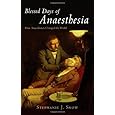
Blessed Days of Anaesthesia - Stephanie J. Snow


Product DetailsI'm pleased to say my husband took a few hours off his maths revision (he's an Open University student too) to write this review:

An interwoven story of chemistry, medicine, philosophy and religion, Blessed Days of Anaesthesia charts the remarkable changing attitudes towards pain during the nineteenth century. As pioneers of ether and chloroform start to challenge the Victorian idea that pain is a God-given stimulant, battles rage about the ethics and morality of such meddling with human consciousness. The story ebbs and flows as anaesthesia has both successes and dramatic failures. While practitioners experiment recklessly on themselves, key players take centre stage: Charlotte Bronte, Charles Dickens and Charles Darwin all become involved, and Queen Victoria herself gives birth to Prince Leopold under the influence of chloroform. Meanwhile, dark stories are emerging from London’s back-streets of nefarious activities committed with the aid of chemical-soaked handkerchiefs, and The Crimean War brings along a whole new wave of human suffering. Blessed Days of Anaesthesia is nicely written and has the intriguing subplots and interesting characters that you would hope to find in an exciting novel.

Long time, no see

I blame Facebook. And Twitter. And Whatsapp. Not to mention Cooking Fever and Candy Crush, both of which I've installed and deleted from...