Showing posts with label Lancaster Litfest. Show all posts

Sunday, 13 January 2013

Castle Park Stories


The streets of Lancaster are full of stories. From the first Roman settlement, the founding of the castle in the eleventh century, the city's brief boom as a trading port to the vibrant community today, if walls could speak they'd have so much to tell.

Castle Park, the small area surrounding the castle and Priory, is one of my favourite parts of town. With its steep cobbled streets, fine houses and a quayside lined with converted warehouses, all in the shadow of the castle itself, it doesn't take a giant leap to imagine the folk living there two hundred or even five hundred years ago. So when Litfest put out a call for local residents interested in history, photography or writing to participate in a lottery funded writing project, I didn't take much persuading.

You can find out more about the project here, but essentially we have six weeks to put together an exhibition about the area.

There's so much scope in such a small area that it's hard to know where to start. Around fifty people want to be involved with interests as diverse as slavery, the Quakers, maritime and family history. Already we've heard some marvellous stories such as the banter between the prisoners held in the castle and the factory girls passing by. So the story goes, the young women would take great delight in giving the male prisoners a glimpse of the delights they were missing. Brazen hussies! We heard too of the grammar school boys who were allowed to go on the roof of the church before prayers to get a better view of the castle hangings. Let that be a lesson to you all boys!

I have my first Open University tutor to thank for the particular piece of history I'm hoping to explore. She's an expert in Lancaster's connections with the slave trade, back in Georgian times when Lancaster was one of England's major ports. She took us on a walking tour of the city and in passing pointed out a rather fine house just next to the castle. Built in 1720, it was once home to a successful merchant involved in the slave trade. He had a black female servant, brought to England from the West Indies. I've always wondered how this woman came to be in Lancaster and how it must have felt to live under grey Lancashire skies so far from home.

I've only just started my research, but already I've uncovered the most macabre tale. Truly, truth is stranger than fiction.

I wonder what other stories this fine house has to tell?


20 Castle Park, Lancaster

Tuesday, 23 October 2012

And Other Stories

By rights, I should have been disappointed that Deborah Levy had flu and couldn't attend on Sunday, but in fact the other half of the event was everything I could have hoped for and more.

Happiness is Possible is Book 5 from independent publisher And Other Stories. Its author, Oleg Zaionchkovsky, was born in Samara on the banks of the Volga and until recently worked as a test engineer in the small Russian town of Khotkovo.

The book's translator, Andrew Bromfield, gave the reading. I overheard after the event that it was the first reading he'd done and I wish now that I'd had the opportunity to congratulate him. Nicely understated, he captured perfectly the dark humour of the extract. He made me realise just how intimately a translator must be involved with his text.  I've read many books in translation before and even done a little translating myself. I understand a little of the nuances of language which aren't always so easy to convey in another language. Having lived in Moscow himself, you get the impression Bromfield understands very well the Moscow Zaionchkovsky is describing.


This is what the blurb has to say about the book:
'A writer is late delivering his novel, unable to write anything uplifting since his wife walked out. All he can produce are notes about the happiness of others. But something draws him into the Moscow lives around him - bringing together lonely neighbours, restoring lost love, and helping out with building renovations. And happiness seems determined to catch up with him as well...'
Modern-day Moscow is very much a character in the book and in the course of the story the narrator rediscovers his love for the city. Bromfield suggested that 'cheerful' was too positive a word for contemporary Moscow. Rather, he said, you have to attack each day to get anything done.

Conversation turned to the publisher And Other Stories. Set up by two translators to publish writers in translation, they are probably better known for the coup of Booker-shortlisted Swimming Home by Deborah Levy. Bethan Ellis from AOS described the difficulties of getting publishers to invest in translation. Funding is a big issue. And Other Stories is a not-for-profit organisation, finding financial support in grants and reader subscriptions. With the help of readers, academics, critics and publishers, they have a collaborative approach to discovering new literary fiction from around the world.  Her enthusiasm for the 'hopeful enterprise' of writing and publishing was inspiring.

Happiness is Possible was shortlisted for both the Russian Booker Prize and the Russian Big Book Prize. If first impressions are anything to go by, it should be a very good read.
You can find out more about And Other Stories here.

Sunday, 21 October 2012

Sad it's all over


Phew, what a whirlwind few days we've had at Litfest. It's been tiring enough with the few events we've supported. Imagine what stamina the Litfest staff must have! Ably assisted by my daughter, I've tweeted, blogged, torn tickets, sold books, made cups of tea and chatted to authors. We've had a fabulous time and met some interesting people. I'll talk more about it over the next few days.

In the meantime, I'm curling up with a glass of red wine to browse my new purchases.


Friday, 19 October 2012

Strange stories at Lancaster Litfest 2012

One of the great things about a good short story is that you're never sure where it's going to take you. That was certainly the case listening to David Constantine and Adam Marek at Lancaster Litfest on Thursday.

Just as I enjoyed reading Constantine's prize winning story set up the road at the Midland Hotel in Morecambe, I was equally delighted when he announced that he was to read 'Goat', based in my home town of Durham. Like watching the 'Holiday' programme to see places you've already been, I was looking forward to mentions of the Market Square, the Cathedral and other favourite places.

Picture then, if you can, a tramp called Goat, so called because of two lumps on his forehead that look as though they might be horns. Goat, who suffers from priapism, has made his refuge in the headmaster's study of the ruined Bluecoats school. The school has been transformed into an ice palace by one of the coldest Christmases in memory. A Canon, about to be defrocked, is brought by the kind-hearted Fay to meet Goat. Fay takes out her penny whistle and soon the Canon and Goat are dancing joyfully, faster and faster, by the firelight.

In 'An Industrial Revolution', Marek transported the audience to the less familiar territory of a palm oil plantation in Sumatra. Set in the near future, this is no ordinary plantation, 'manned' as it is by humanised orangutans. We discover that these are no ordinary orangutans; they walk on two legs, handling dangerous tools with great dexterity and communicating in sign language. As the story unfolds, narrated by an investigative journalist revisiting the plantation after twenty years, we realize the shocking part played by his companion Eleanor in the development of the orangutan colony.

Constantine says that he is not a realist writer. Despite the realist settings of his stories, he acknowledges that his characters are often decidedly odd. But then, he argues, all people are odd, and some are odder than others. In Goat, Constantine shows man's urge to feel more alive.  For the Canon this is a utopian moment - only a short-lived escape from mundanity - but remarkable nonetheless.

For Marek too, strangeness is rooted in reality. He spoke of the importance of specificity in story telling. Even when writing about the future, not everything we know will have been abandoned. There will still be, he argues, antique chairs and biscuit tins.

So why do these writers prefer the short story to longer fiction? Constantine confessed to a loathing of the pluperfect tense. In a short story it's easier to experiment with form and not be constrained by novelistic conventions. He's not interested in the preamble or the closure - he wants to get straight to the part that interests him. Marek too enjoys the the freedom to experiment with form and perspective.  Short stories have the added benefit, he suggests, of being easier to abandon than a novel if they're not going well.

All in all, with intriguing stories and interesting debate, it was another entertaining evening at Lancaster Litfest.

Thursday, 18 October 2012

Vampires, teenage monsters and what lies beneath

At Lancaster Litfest on Wednesday evening Celia Rees, Chris Priestley and Cliff McNish shared their love of monsters and the thrill of scaring and being scared.

It was Coppola's film Dracula that inspired Rees to write about vampires. She read from Blood Sinister and explained how the idea of a narrative based on found documents helped make her vampire real for a modern audience.

Priestley told the audience how his 'macabre sensibility' shaped his writing. Struck by the similarity between Frankenstein's monster and a needy teenager, he wrote Mister Creecher. Like Frankenstein's creation, the young Billy is shunned by society and Priestley's book tells the story of  the child deprived of a loving family making friends with a monster. As Billy and Mister Creecher look through the window into a cosy family home to what extent, we wonder, is the monster a product of his environment and upbringing?

Another fan of illicit horror film viewing, McNish is 'in it for the monsters'. Fascinated by the 'misunderstood' monster, he considers what makes and restrains the monster. He read the opening pages of Savannah Grey. We followed the monster up the stairs of Savannah's house, anticipating the awful attack, only for McNish to end his reading just before the crucial moment. How the audience groaned!

Apart from a brief spell on the door, my main task for the evening was to tweet about the event. Apologies to Lancaster Litfest for neglecting my job, but the discussion after the break was just too interesting. From nightmares and dark corners to houses that should be safe but aren't, the writers shared their thoughts on what makes a Gothic story. They speculated on the reasons for the recent popularity of the Gothic, particularly amongst young adult readers. Is it that their lives ahead are already mapped out for them, and they want to escape from the mundane? Have physical dangers been replaced by more psychological ones? Are teenagers in that twilight zone between child and adult? Are they 'other' too?

As is the way with these things, as many questions were raised as answered and the time passed far too quickly. Certainly, it has whetted my appetite for the Litfest events ahead.

You can find out more about Lancaster Litfest here.


Thursday, 11 October 2012

Swimming Home - Deborah Levy

Kitty Finch is trouble. A beautiful young woman, suffering from depression, she interrupts a family holiday in a French villa. They find her swimming naked in their pool. A double booking leaves her with nowhere to stay, so the wife of the family invites her to stay on with them. Having decided to stop taking her medication, Kitty is clearly unstable.  Her presence unsettles everyone, from the troubled poet Jozef and his poised war correspondent wife, to their adolescent daughter and the gluttonous friend with a penchant for guns.

The reader soon senses danger, but is only as the story unfolds that we realize who is most at risk.

Levy's writing disorientates the reader, just as Kitty's presence disturbs the protagonists of the story. From the very first lines Levy's prose is perceptive and unsettling:
'When Kitty Finch took her hand off the steering wheel and told him she loved him, he no longer knew if she was threatening him or having a conversation.'
Although it's hard to imagine anything beating Hilary Mantel's Bring up the Bodies to the Booker Prize, Swimming Home, with its Freudian depths, should be a strong contender.

The book is noteworthy too for its unusual publishing history. Funded by subscriptions from readers, the book is published by And Other Stories. You can find out more about the ways in which the readers influence the choice of books at http://www.andotherstories.org/

Deborah Levy is appearing at Lancaster Litfest on Sunday 21st October. You can book tickets here.


Monday, 8 October 2012

Lancaster Litfest 2012 - Curate's egg picks

In an ideal world, I would immerse myself in books for a whole week, gliding seamlessly from event to event, and talking all things literary with friends old and new over coffee and cake.

Since I can't possibly enjoy it all, here's my selection from a packed program of events:

Wednesday 17th October - Gothic Young Adult Fiction. After last year's excellent talk on pushing the boundaries in YA fiction, my daughter's really looking forward to this one. With Cliff McNish, Chris Priestley and Celia Rees.

Thursday 18th October - David Constantine (winner of the 2010 BBC National Short Story Award) and Adam Marek read from their short fiction collections.

It's so tempting to spend the whole weekend of 20th/21st enjoying the Poetry Shindig (Saturday) and Prose Shindig (Sunday), but I'm rationing myself to a couple of events each day.

Saturday 20th October - Gillian Clarke & Robert Crawford. Two poets, one Welsh and one Scottish. In At the Source, Clarke writes with great passion about the relationship between language and place so I'm hoping for more of the same.

Saturday 20th October - An Evening with John Hegley, poet, comedian and performer. This is the event chosen by our book group. I've never seen Hegley before, but having watched clips on YouTube I'm looking forward to an entertaining evening.

Sunday 21st October - And Other Stories present: Deborah Levy and Oleg Zaionchkovsky I'm intrigued by And Other Stories' unusual publishing route, involving readers in the publishing process through of a series of readers groups, on-line forums and discussions. Deborah Levy's novel Swimming Home has been short-listed for the Booker Prize. It's a disconcerting book, with some great writing. I'll be posting a review soon.

Sunday 21st October - Jo Baker and Zoe Lambert - The Right to Imagine. Two North West writers talk about the role of war in story telling.

There's too much else going on to mention it all here, but you can find the whole programme on the Lancaster Litfest website.

Tuesday, 2 October 2012

Autumn reading and other matters

These are busy times. Last week, my Italian exam and my son's grammar school entrance test. This week, a job interview and graduation at the Bridgewater Hall in Manchester. It's times like these when reading gets pushed to the edges of my days. Yet it's at these moments when reading can keep me sane. Given all that's going on at the moment, it's good to have some things to dip into. I'm enjoying my Litfest related reading. Gillian Clarke's poetry and her reflections on the relationship between language and places in At the Source are a joy to read. I find myself reciting her lines out loud in the bath. 

Ear to the wall of the night. Listen
to your blood beat in the pulse of your pillow,
the water table rising in your bones,
the future drumming the ground like a train on the track.
I have short stories to entertain me too - Zoe Lambert's collection The War Tour and David Constantine's Tea at the Midland and other stories. The Midland Hotel in Morecambe is one of my favourite places. It was the subject for one of my first posts on this blog. I've always thought it would be a good setting for a short story and I'm rather miffed that Constantine beat me to it. I must admit he made a rather good job of it though, winning the 2010 BBC National Short Story Award.

On the prose front, I'm currently re-reading The Outsider by Camus. This book bowled me over when I was seventeen and I'm curious to see what effect it will have on me now. As you can probably tell, my Classics Club Challenge has taken a back seat over the last few weeks, so I'll be looking forward to getting back in the swing of things with Daphne du Maurier's My Cousin Rachel. Rebecca is the only du Maurier I've read until now, so this will be my literary box of chocolates over the coming weeks.

Finally, thanks to Lizzy's Literary Life I have The Bridge of the Golden Horn by Turkish writer Emine Sevgi Ozdamar. The story of a young Turkish migrant worker who comes to Germany, the review describes it as 'a witty, picaresque account of a precocious teenager refusing to become wise.' This was the second book I have won this year. Perhaps I'm on a lucky streak. I certainly hope so.

Friday, 31 August 2012

Lancaster Litfest - first impressions

I've taken a first peek at Lancaster Litfest's 2012 programme. It may just be that I've overdone the caffeine today, but now I'm all aflutter.

It's probably more years than I realise since my first experience of Lancaster Litfest. I heard Wendy Cope read at the Dukes Theatre. I'd never been to a poetry reading before and I wasn't sure what to expect. I felt sure that all female poets must wear scarves. I've even tried wearing a scarf myself, but I still couldn't make my lines scan.  Wendy Cope didn't wear a scarf, but she did look like my grandma and her poetry was warmly received. By the time I saw Carol Ann Duffy in 2010, I was hooked.

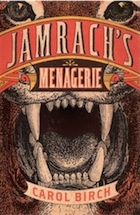
Last year our reading group went to hear Carol Birch talk about her Booker short-listed novel, the wonderful Jamrach's Menagerie.  I took my daughter to the discussion of young adult literature and wondered about drawing boundaries in teenage reading, before realizing that the boundaries had been crossed without my even realising.

My brief excursion into creative writing did go some small way to demystifying the art of writing. No longer did I view writers as gifted gods, far above Premiership footballers and Hollywood actors. These were people like you and me. Didn't they have days too when the ideas didn't come, or the words clumped together on the page like lumpy porridge? I was determined not to feel out of place amongst the 'literary types' in both the audience and on the stage.

So this year, in a spirit of adventure, I have put myself forward as a volunteer to promote Lancaster Litfest in the ether and anywhere else where people will listen. I have no idea what this will entail, but I'm hoping it will lead to some interesting experiences and blog posts too.

I've yet to study the Litfest brochure in all its details, but I've already circled the poet Gillian Clarke and Jo Baker, author of The Picture Book, reviewed in my last post. My daughter's eyes lit up at the mention of the  Gothic young adult fiction event, so that's another for the diary.

You can view the Lancaster Litfest brochure here. Let the reading begin!

Thursday, 2 August 2012

August reading

August is the busiest month, workwise at least, so since all work and no reading makes Jane a very dull girl, I'm making sure I've got some entertaining books lined up for the weeks ahead.

I've been meaning to read Lancaster author Jo Baker's The Picture Book since I saw her at last year's Litfest. I'm a hundred pages in and it's shaping up very nicely. It begins in a London picture house in 1914 and works its way through four generations. Above all, she tells a good story and there's a lot to be said for that.

My husband has just read Blessed Days of Anaesthesia: How anaesthetics changed the world, and tells me it is very interesting. I hadn't appreciated the ethical issues that surrounded the development of anaesthesia in Victorian times, so it's as much a social history as it is about medicine. Now he's finished grouting the bathroom I'm rather hoping he'll do a review for me.

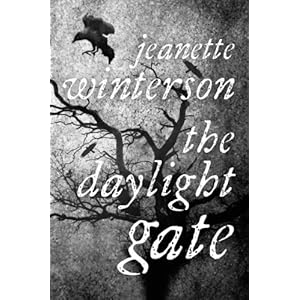
The Daylight GateI've pre-ordered Jeanette Winterson's new book The Daylight Gate about the Pendle witches. I do have a particular interest in the witches, since they were tried at Lancaster Castle and hanged less than a mile from here.  The book's due out mid-August so I'll talk more about that in a future post.

I'm also looking forward to the announcement of the line-up for Lancaster Litfest in October. I'm hoping it'll make for some interesting additions to my reading list.

All this and classics besides - I'd better get reading!

Tuesday, 10 July 2012

Art and literature


I popped into Lancaster's new independent bookstore in The Storey Institute today. With a range of contemporary poetry and books by Litfest authors, it's a great source of reading ideas.

It's a quirky little place, celebrating the written word as visual art too.

Another TBR pile?


Paper houses

Printers' trays for sale


But one thing in particular took my eye...


Made entirely of books - 2500 pages from copies of Angela Carter's Book of Fairy Tales to be precise - this fabulous dress took three days to create. It's not just a work of art though, it was actually worn by contemporary fairy tale author Claire Massey.

Tuesday, 18 October 2011

Jamrach's Menagerie

I'm sitting comfortably with a glass of Pinotage awaiting the Booker Prize announcement.   I must admit to a vested interest here.  Carol Birch, author of Jamrach's Menagerie, lives in Lancaster.  I've just finished her book this evening.  In the course of reading it, I've gone from admiration to horror and travelled from East London to the middle of the Pacific.  I've marvelled at her fantastic imagination.  Just how do you write like that and then turn off your computer and cook dinner?

I'm looking forward to seeing Carol Birch at Lancaster Litfest tomorrow evening.  Just as football fans revere their favourite striker, or others love to celebrity spot, I find myself in awe of writers.  I've seen Wendy Cope and Carol Ann Duffy at previous Litfests and, although I've enjoyed both evenings, I felt a little disappointed at the ordinariness of them.  Surely they should have some special aura of creative genius?  The truth is, of course, that they are really just like us.  They have days too, I imagine, when there's too much to be done to have time to write.  They have days too, perhaps, when they read what they've just written and despair.

Perhaps there's hope for us yet.

Long time, no see

I blame Facebook. And Twitter. And Whatsapp. Not to mention Cooking Fever and Candy Crush, both of which I've installed and deleted from...