'The North is the dark place.
It is not safe to be buried on the north side of the church and the North Door is the way of the Dead.
The north of England is untamed. It can be subdued but it cannot be tamed. Lancashire is the wild part of the untamed.
The Forest of Pendle used to be a hunting ground, but some say that the hill is the hunter - alive in its black-and-green coat cropped like an animal pelt.
The hill itself is low and massy, flat-topped, brooding, disappeared in mists, treacherous with bogs, run through with fast-flowing streams plunging into waterfalls crashing down into unknown pools. Underfoot is the black rock that is the spine of this place.
Sheep graze. Hares stand like question marks.
There are no landmarks for the traveller. Too early or too late the mist closes in. Only a fool or one who has dark business should cross Pendle at night.
Stand on the flat top of Pendle Hill and you can see everything of the county of Lancashire, and some say you can see other things too. This is a haunted place. The living and dead come together on the hill.'
 |
| Lancaster Castle, site of the Pendle Witch trials |
I must admit to having a particular interest in the Pendle Witches. In August 1612 the Witches were tried at Lancaster Castle and hanged just a stone's throw from my house. On a dark and stormy night I can almost imagine their cries on the wind-swept hill... You can visit the Castle and see the dungeon where the Witches were imprisoned. You can have a drink at The Golden Lion, supposed to be the final stopping point for the Witches on the way to the gallows.
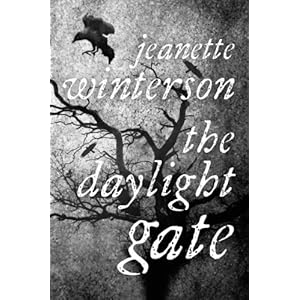
The story begins on Good Friday 1612, with a mysterious gathering of thirteen people at Malkin Tower on Pendle Hill. The gathering is discovered by Roger Nowell, the local magistrate, and from here the story of the unfortunate women unfolds. Winterson does not spare the reader any of the horrors of the women's life either before or after their capture. For the most part they were superstitious, ill-treated women, victims of their own ignorance and poverty. One woman, however, does not fit this mould. She was Alice Nutter, rich widow and landowner. It is Alice's story that is at the heart of the book.
For the first few chapters I didn't know what to make of it all, but once I abandoned my own ideas and prior knowledge of the Witches I found I could properly engage with the story. Winterson combines fact with fiction, reality with witchcraft and religion. Seventeenth century England was obsessed with witchcraft and treason. The Protestant King, James I, wrote Daemonologie, supporting the practise of witch hunting. At the time, witchcraft was considered to be inextricably linked with Catholicism, or 'witchery popery popery witchery' as the lawyer Thomas Potts liked to put it. I certainly hadn't appreciated that the conspirators of the 1605 Gunpowder Plot had fled to Lancashire, making the county a prime target for accusations of witchcraft and treason.
Winterson was commissioned to write The Daylight Gate for Hammer Books. She herself says that the book was written 'as a kind of dare', to see if she could write a Hammer Horror. There is undoubtedly horror in the book, from the Witches' macabre practices to their terrible treatment before and after their capture. Nor does Winterson spare us the horror of seventeenth-century tortures, as suffered by the Papist Christopher Southworth, Alice Nutter's lover. Strangely though, despite the horror, I will remember the book mostly as a love story. I don't want to give too much away, but if you do read the book you'll see what I mean.
I'm not sure what fans of Winterson's other writing will make of this, but as an imaginative retelling of a fascinating story, I'd certainly recommend it.